what are you looking for?
In late 2025, “PFAS-free” stopped being a niche lab request and became a supplier qualification topic. Packaging is increasingly treated like an ingredient-adjacent material because regulatory questions often look beyond the final product and focus on what touches, surrounds, or coats the formula over time.
For cosmetics brands exporting tubes, caps, and coated laminates, the risk is not only compliance—it is also credibility. If your claims cannot be substantiated across the whole packaging stack (tube body, cap, liner, adhesives, coatings, inks), marketing copy can trigger extra audits, slower approvals, and expensive rework.
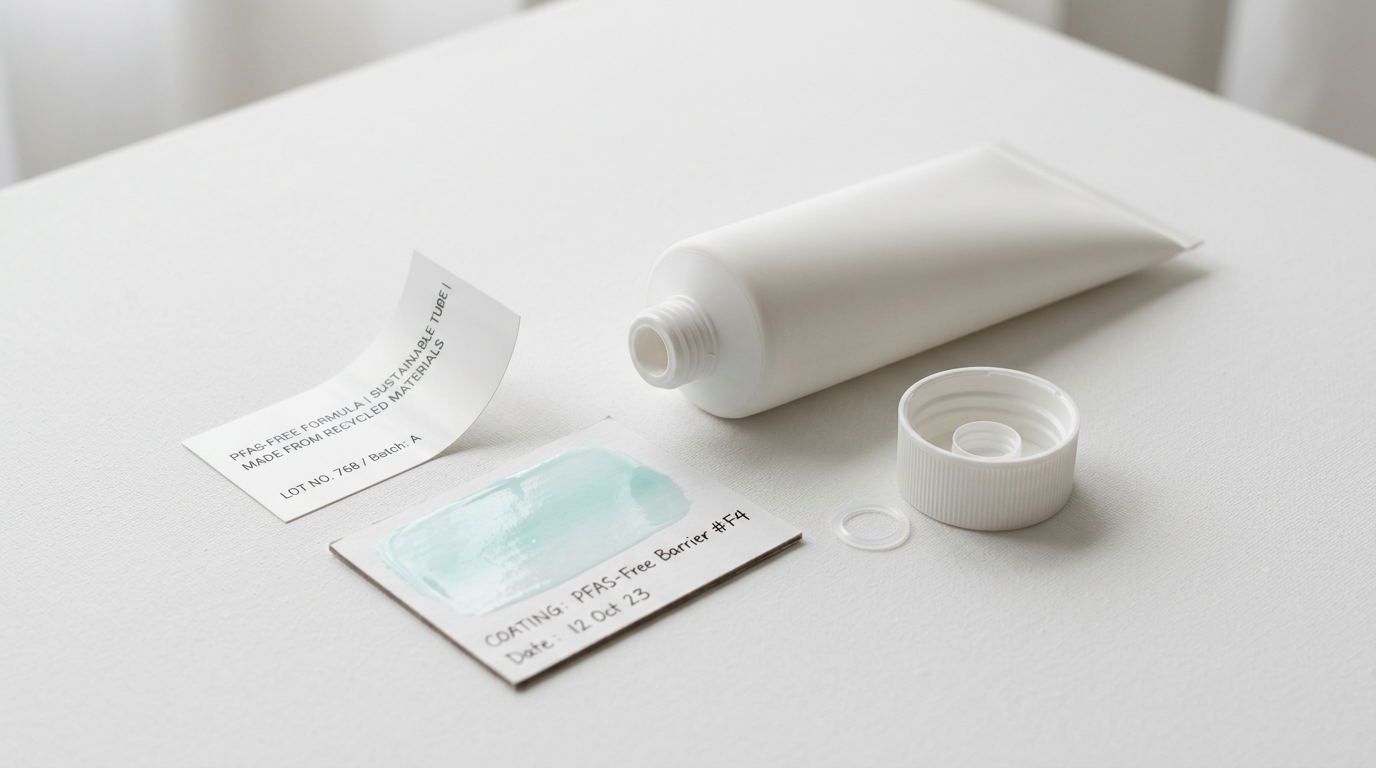
Start with a simple RFQ change: ask for chemical composition declarations for the entire system, not just a one-page “complies with X” letter. Clarify which components are in scope (tube extrusion resin, pigments/masterbatch, internal coating/lacquer where applicable, cap elastomers, threads, and any functional surfaces).
Then separate “fluorine-free” from “PFAS-free.” Many suppliers can remove obvious fluorinated finishes, but the real question is whether the supplier can demonstrate absence of targeted PFAS substances under the methods your market expects.

PFAS questions frequently show up in the “small things” that brand decks ignore: label adhesives, overcap liners, release coatings on process tooling, and barrier-film treatments used to manage oxygen or aroma. Even if the tube resin is not the concern, downstream materials can create an audit trail you do not want to discover at sampling.
For tube programs, also check inks and varnishes. Some decorative systems use specialized binders to improve rub resistance and gloss retention. If those systems were sourced from suppliers without PFAS documentation discipline, they can become the bottleneck at certification time.
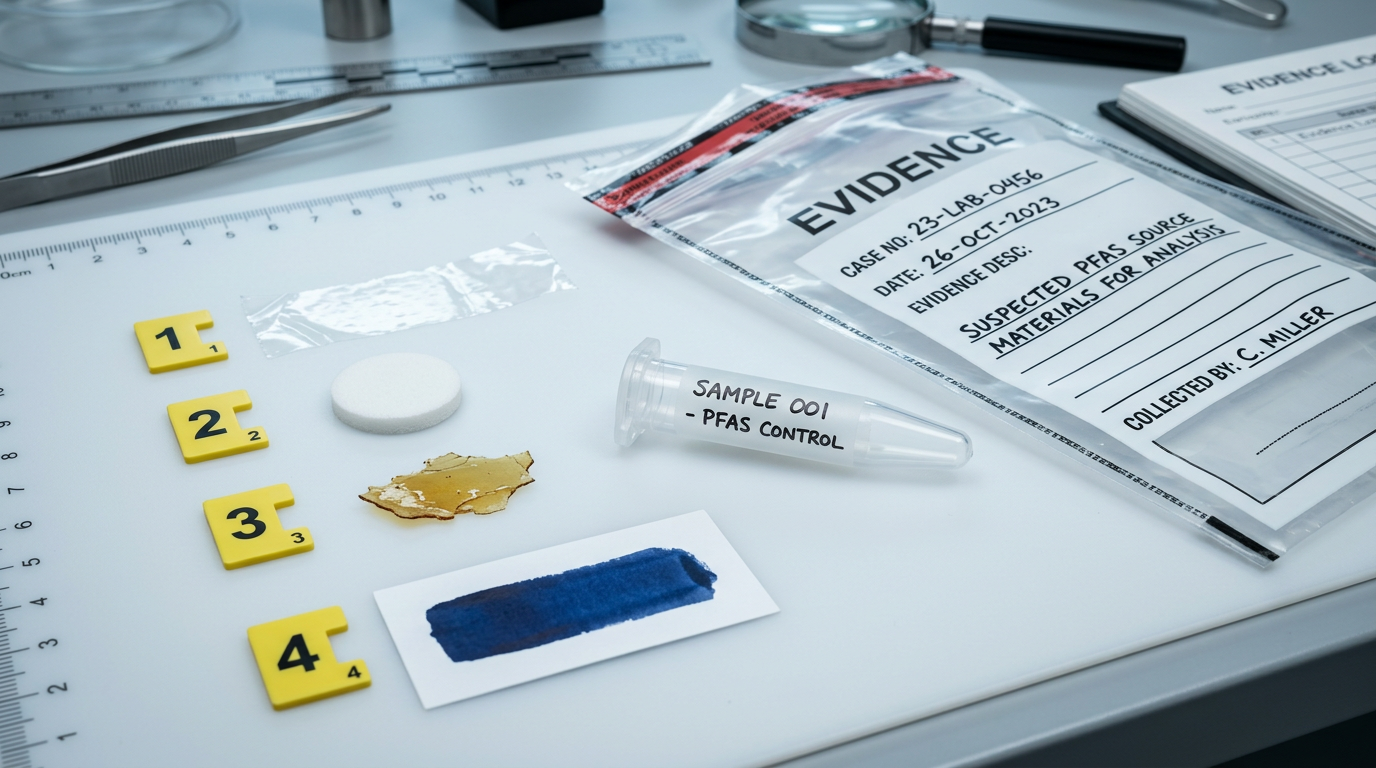
Write the documentation you need in testable terms. Ask for supplier declarations supported by a defined approach: analytical screening, targeted tests where required, and an explicit “substance list” (what exactly is being claimed as absent).
Require traceability by lot or at least by production batch and change-management. If the supplier changes a masterbatch vendor or coating supplier, ask whether they re-validate and how quickly they inform you—because your on-pack claim depends on continuity, not a one-time stamp.
PFAS-free packaging is a claim category where “simple wording” can be risky. If you use a broad statement without the documented scope, regulators and retailers may interpret it as covering every component, accessory, and coating layer.
A safer workflow is: confirm claim scope, confirm evidence scope, and then decide what to put on-pack. When in doubt, treat PFAS-free messaging like regulatory communication, not like lifestyle copy—because the penalty for over-claiming is usually larger than the effort needed to do it correctly.
Ask for scope mapping first: which tube/cap/coating/ink/adhesive components are included in the PFAS-free statement. Then request evidence style: declarations with method references, substance lists, and change-management commitments.
Finally, add a sampling rule: do not treat compliance paperwork as “enough.” For export programs, align sampling quantities and approval timing so you can validate claims before your tooling schedule forces last-minute supplier swaps.

 Add: No.2, Nanyu Street, Xinzao Town, Panyu District, Guangzhou City, China
 Mobile:+86 13560168895
 Email: [email protected]
 WhatsApp: +86 13560168895


 LEAVE A MESSAGE




 Free Sample