what are you looking for?
Digital Product Passport (DPP) is quickly becoming the search term behind buyer questionnaires: not just “what resin is it,” but “what data can you prove, export, and update.” For cosmetics packaging, DPP pressure often arrives as data-feed requests to retailers and distributors, then flows into supplier onboarding requirements.
If you supply cosmetic tubes and closures, your buyers may ask for structured attributes that map to packaging datasets: material composition, separability statements, ink/adhesive details, and sometimes recyclability documentation formatted for automated review.

Most tube programs store the truth in different places: resin declarations in one folder, coating specs in another, labeling information in prepress docs, and recycling letters in sustainability reports. DPP shifts the expectation: data must be consistent, machine-friendly, and reproducible when auditors ask for “the same SKU, same claim, new export channel.”
This fragmentation is also where mistakes happen. If your label stock changes, or if the cap elastomer supplier updates a formulation, your DPP must reflect the update. Otherwise, your dataset becomes a mismatch artifact—perfect for SEO traffic, but a problem for compliance teams.

Define what you can provide reliably: a component list, each component’s material type, evidence for inks/adhesives where relevant, and a statement about separability/disassembly assumptions for the end market. Buyers do not want “we think it is recyclable”—they want traceable claims tied to defined scenarios.
Then include change-management metadata: update dates, part-number mapping, and whether documentation is valid for new production lots. That is the practical difference between a static letter and a DPP-ready dataset.
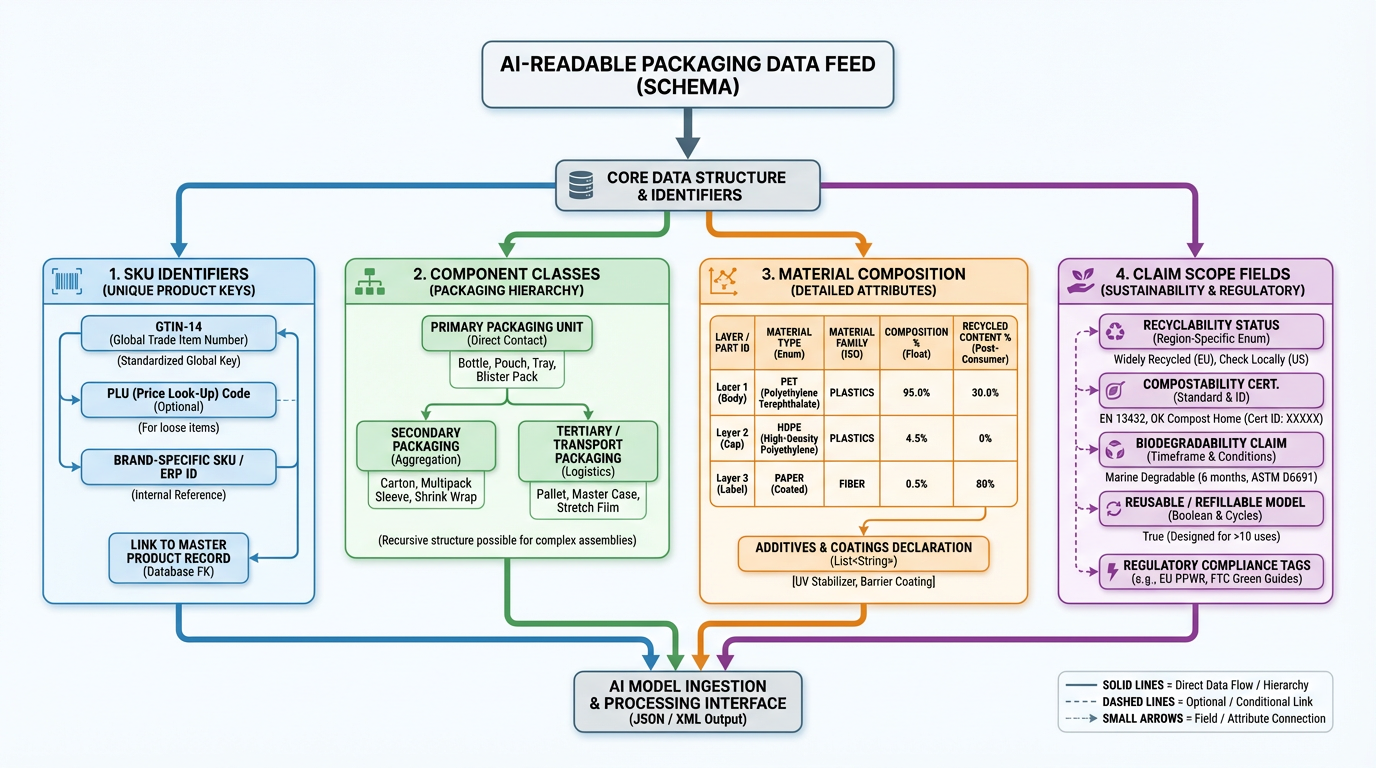
Use a stable schema: SKU identifiers, component classes (tube body/cap/liner/label), material composition percentages when available, and claim scope fields. Keep language consistent: if you say “compatible with local PP recycling,” do not later switch to “widely recycled,” because DPP datasets can be compared automatically across time.
If you are unsure what your buyer’s downstream system expects, ask for an example import file early. In DPP-style workflows, format is not a detail—it is the difference between “approved” and “returned for rework.”
The most common DPP failure mode in tube programs is SKU mismatch: different cap variants, different label stocks, and different finishing coatings that share the same product name in sales systems. Fix this by linking part numbers across manufacturing and prepress.
For fast launches, enforce a release gate: if a supplier cannot confirm the dataset completeness for the configuration you are tooling, delay the DPP submission. Better a short schedule slip than an approval loop that resets your sampling calendar.
DPP is operational. It requires repeatable inputs and a predictable update process. When you design your tube program with DPP data flow in mind, you reduce both buyer friction and long-term compliance risk.
If you want the easiest win for 2026, build a reusable “DPP evidence pack” template for tube programs and closures. Then map every new SKU to the template before you print labels.

 Add: No.2, Nanyu Street, Xinzao Town, Panyu District, Guangzhou City, China
 Mobile:+86 13560168895
 Email: [email protected]
 WhatsApp: +86 13560168895


 LEAVE A MESSAGE







 Free Sample