what are you looking for?
Preservative-light creams and serums fail quietly: color shifts, separation, or off-odors long before the printed expiry. Airless systems reduce the oxygen and finger-contamination cycles that drive those failures. The choice between a tube-based airless pump and a cylindrical bottle is less about “premium look” and more about viscosity, evacuation, and how your filling line meters product.
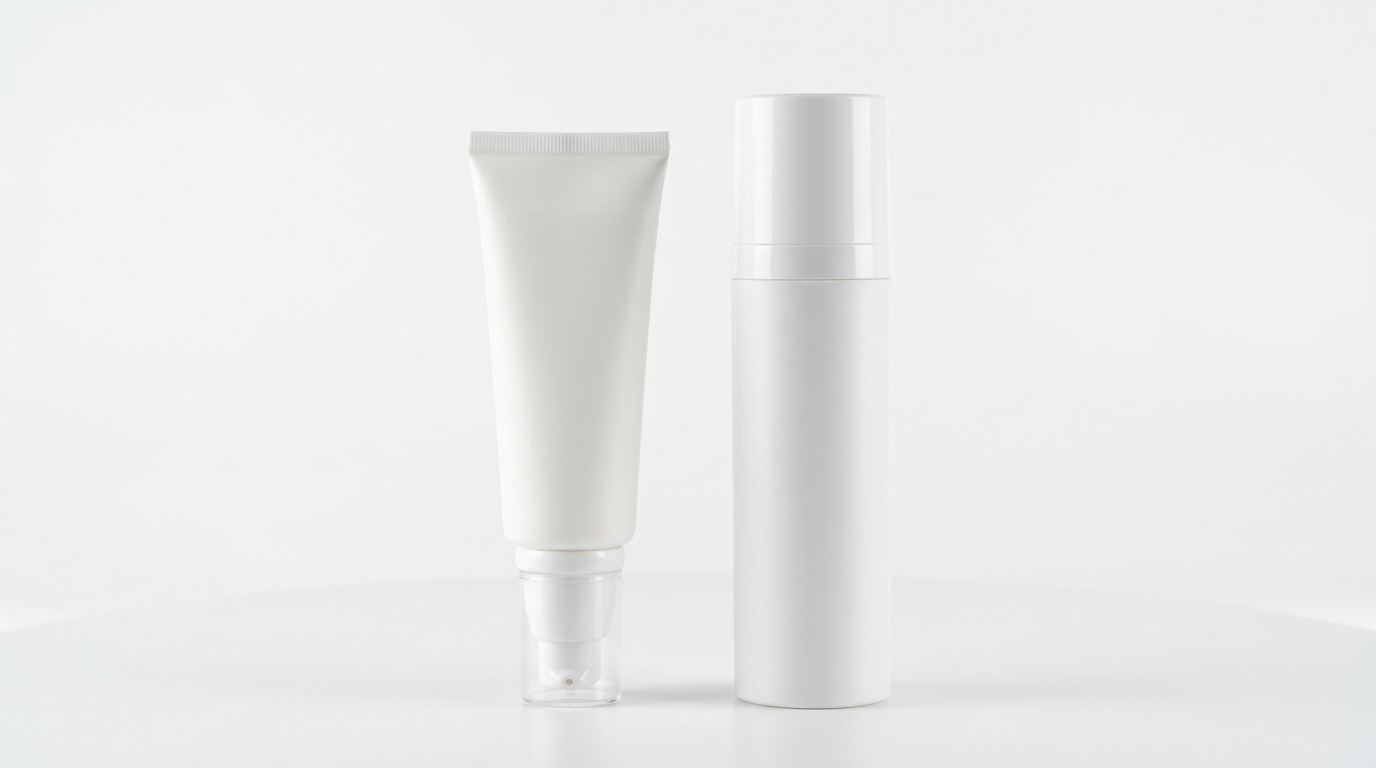
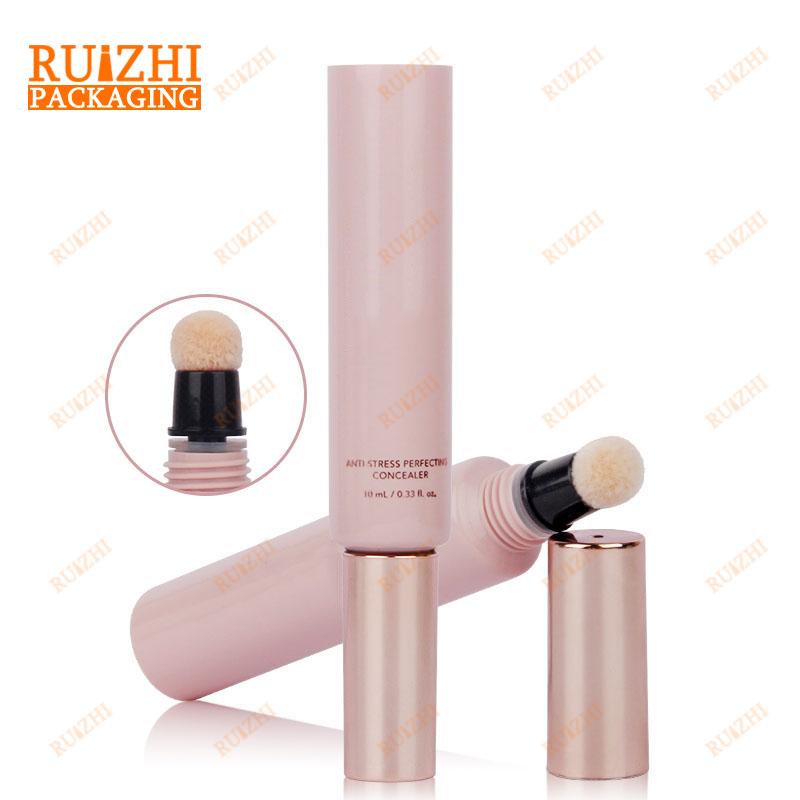
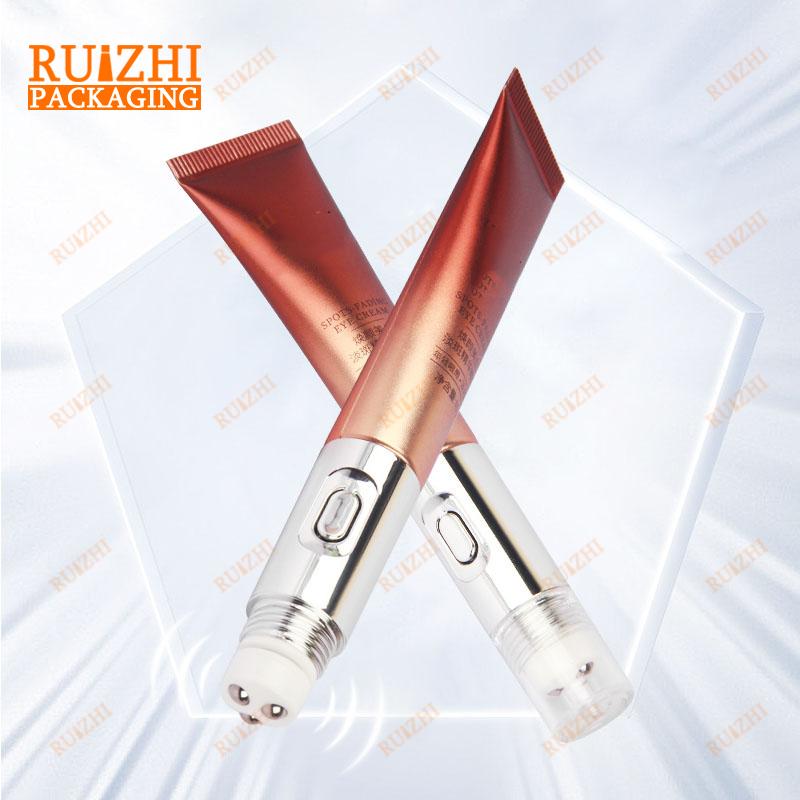
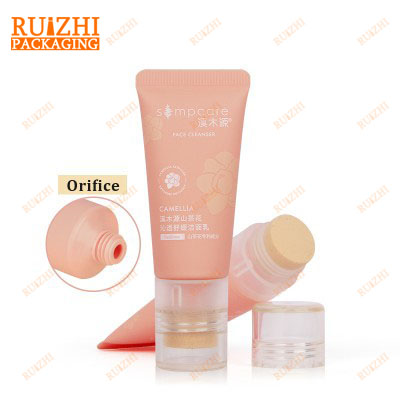
Travel-friendly SKUs, hybrid makeup-skincare, and products consumers use one-handed often land on airless tubes. The pack rides in a gym bag, survives a pressurized cabin better than some thin-walled bottles, and still delivers metered doses. If your formula is medium viscosity and your brand equity tolerates a softer silhouette, tubes can reduce dead space in shippers compared with rigid rounds.
Engineering review should include pump elastomers against your actives, maximum residual after declared life, and what happens if the consumer stores the pack cap-down for a week—a common misuse case.
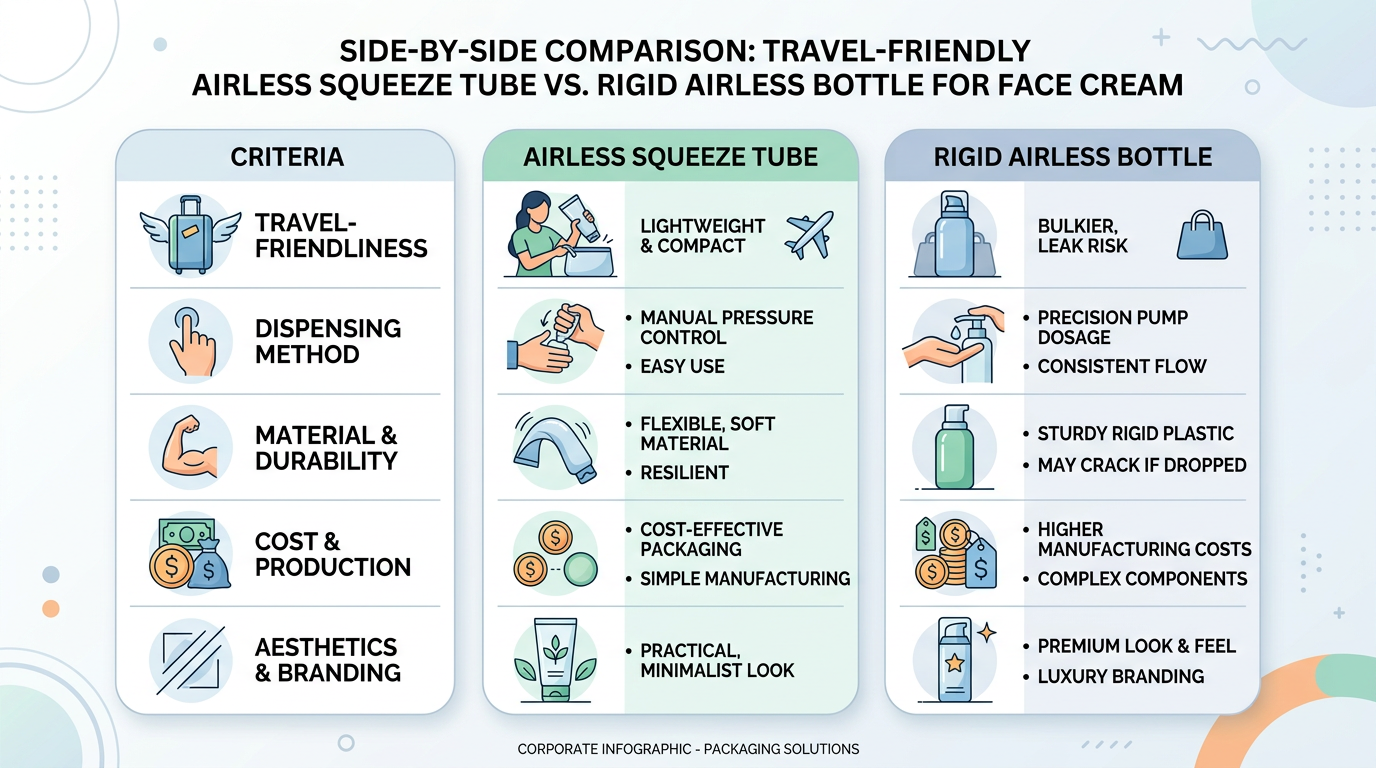
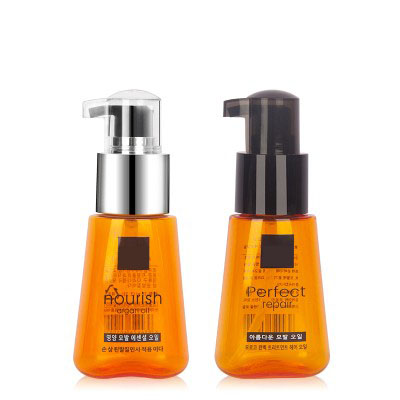
High-viscosity butters, very large fill sizes, or campaigns that demand a heavy glass-look base still favor bottles. Bottles also simplify certain secondary decoration schemes and can accept wider pump architectures with metal springs hidden behind an outer shell—at the cost of resin complexity.
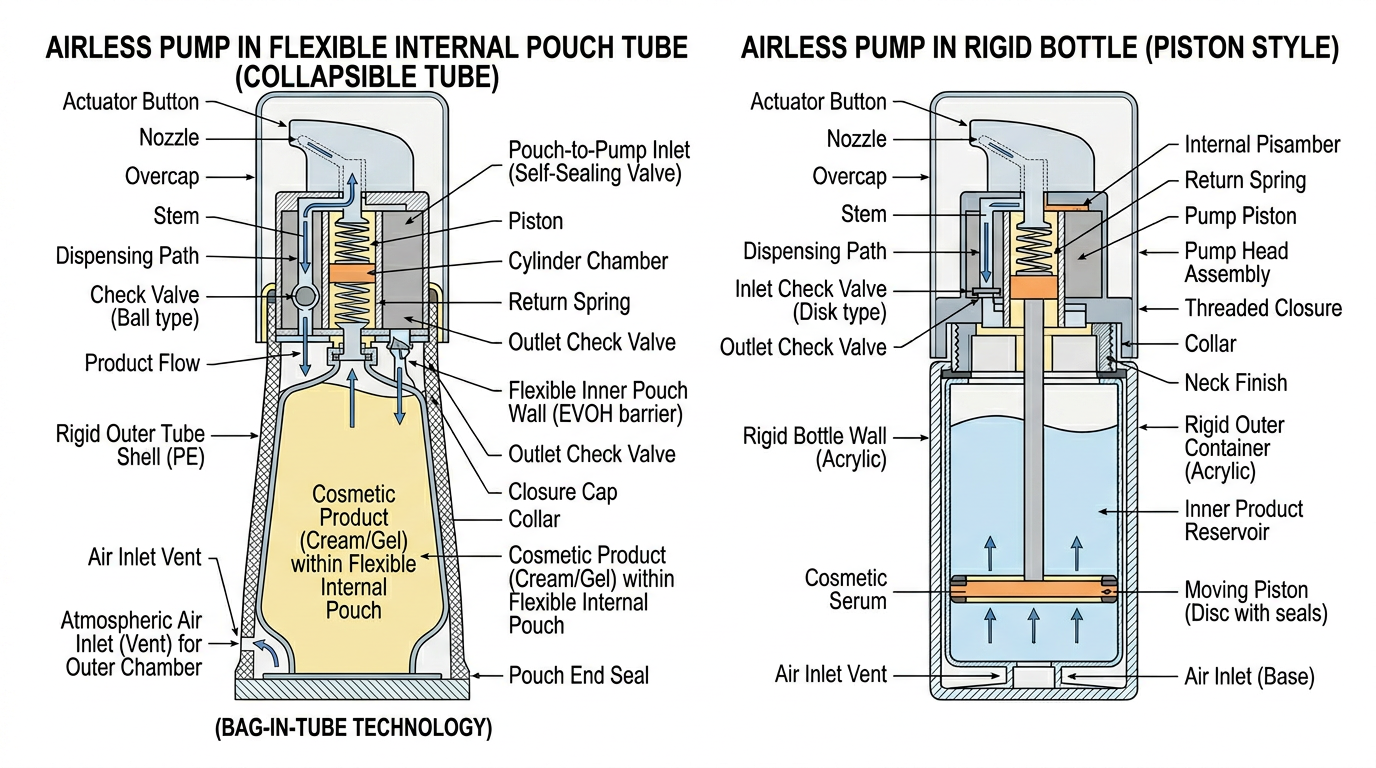
Run paired stability in both formats if the decision is close. Track weight loss, pump slip, and color on the same schedule. Involve filling engineering early: switching from bottle to tube can change cavitation, tip drying, and capping torque alarms in ways that mock-ups alone will not reveal.
Pick airless tubes when portability, line integration, and unit economics align; pick bottles when formula rheology or brand architecture demands a rigid stage. Let data from your actual fill—not generic benchmarks—break ties.

 Add: No.2, Nanyu Street, Xinzao Town, Panyu District, Guangzhou City, China
 Mobile:+86 13560168895
 Email: [email protected]
 WhatsApp: +86 13560168895


 LEAVE A MESSAGE




 Free Sample