what are you looking for?
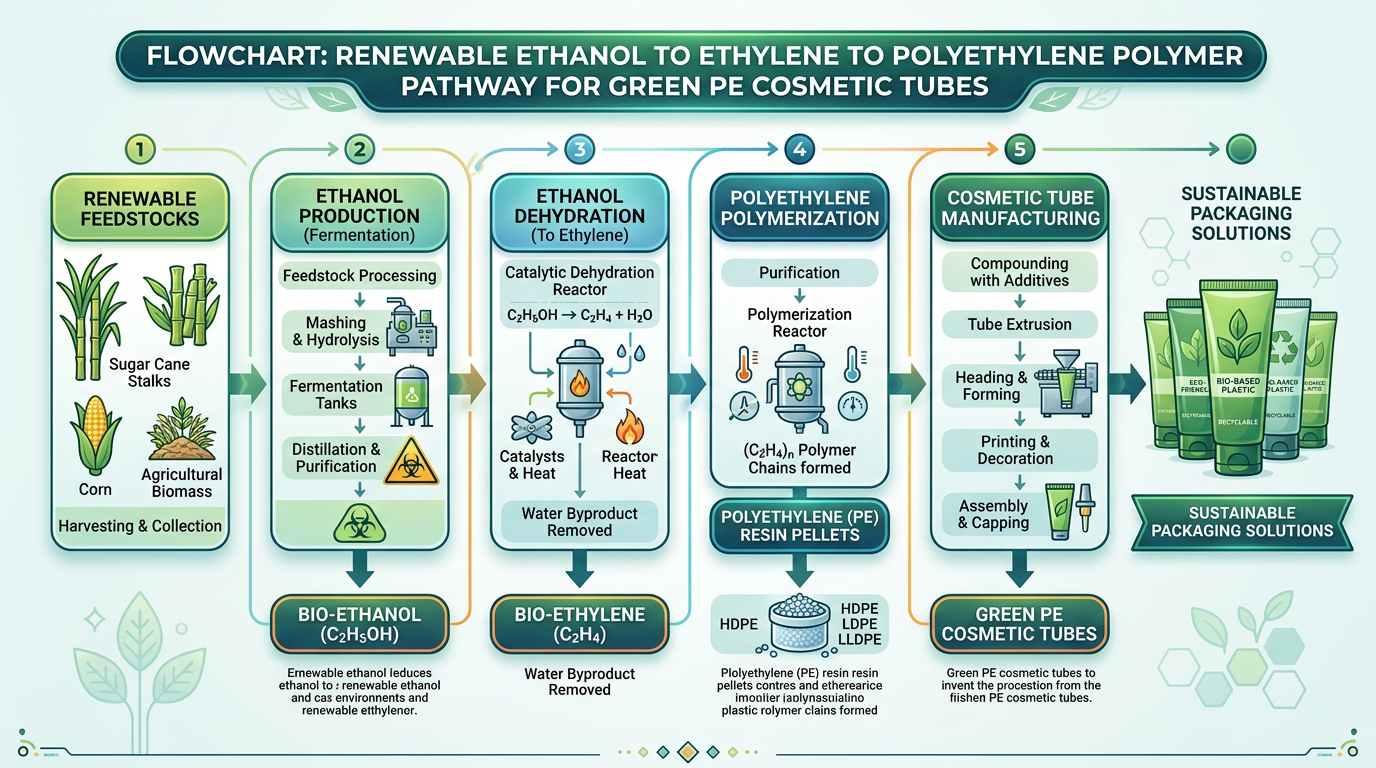
Bio-based polyethylene—often called sugarcane PE or green PE—uses ethanol derived from renewable feedstock to build ethylene that polymerizes into PE familiar to converters. Chemically it behaves like fossil PE in many processing windows, which is why brands adopt it without redesigning every shoulder and cap interface.

Renewable carbon content and product carbon footprint reductions are legitimate angles when backed by supplier LCAs. “Biodegradable” or “compostable” are different families of claims and should not be mixed into green-PE copy unless the pack is certified for that end-of-life pathway.
Recyclability usually follows local PE rules, but labels and sleeves can still disqualify the pack. Treat green PE as a feedstock story layered on top of—not instead of—good design for recovery.
Ask how the producer documents biogenic content for customs and eco-labels in your destination countries. Confirm masterbatch and colorant approvals for cosmetic contact, and whether the lot will stay within your color standard when agricultural inputs vary seasonally.
Map your distributor’s language carefully: some retailers treat bio-based PE like conventional PE for sorting, while others ask for separate SKUs in data feeds. Resolve that before you print recycling copy on the first ten thousand units.
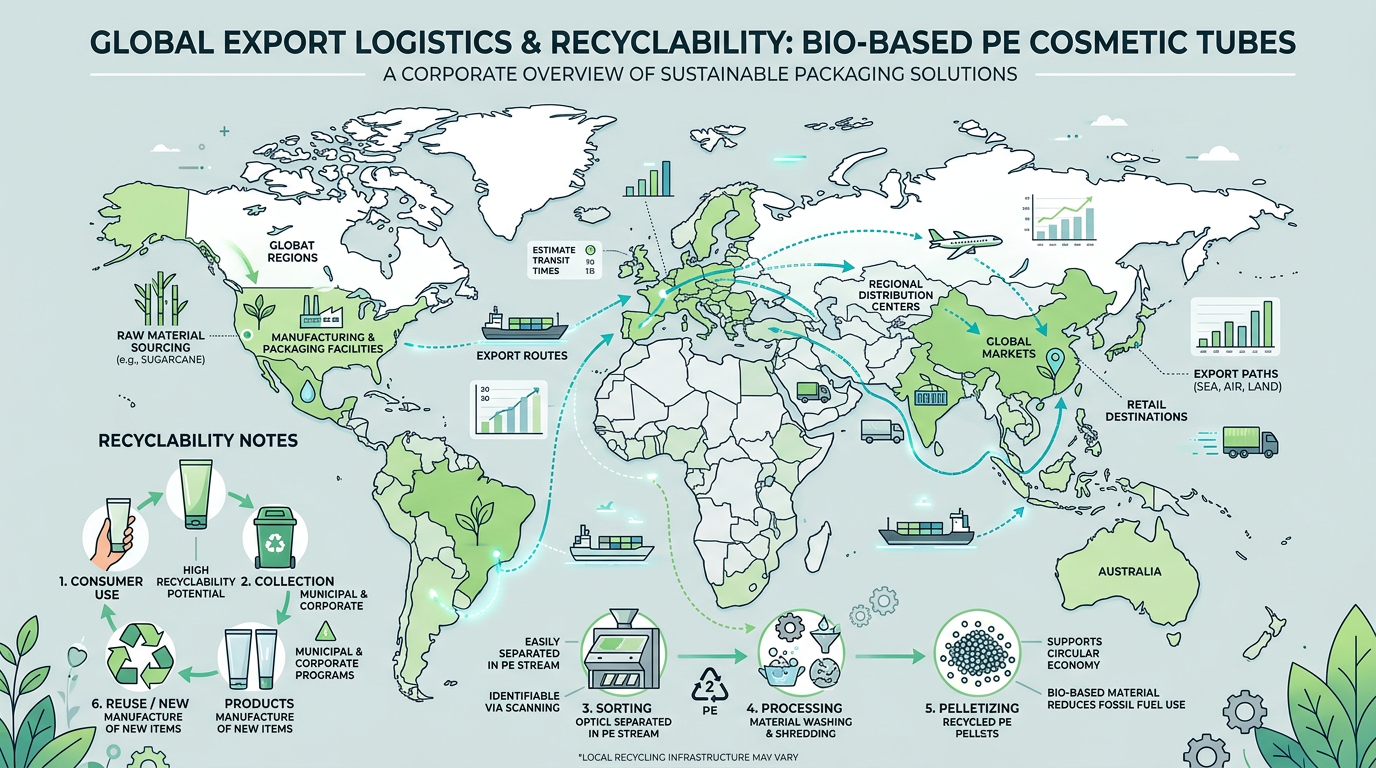
Green PE tubes fit brands that need a credible renewable narrative while staying inside conventional PE recycling where infrastructure allows. Keep marketing precise, and validate compatibility like any other resin change.

 Add: No.2, Nanyu Street, Xinzao Town, Panyu District, Guangzhou City, China
 Mobile:+86 13560168895
 Email: [email protected]
 WhatsApp: +86 13560168895


 LEAVE A MESSAGE




 Free Sample